January 5, 2026
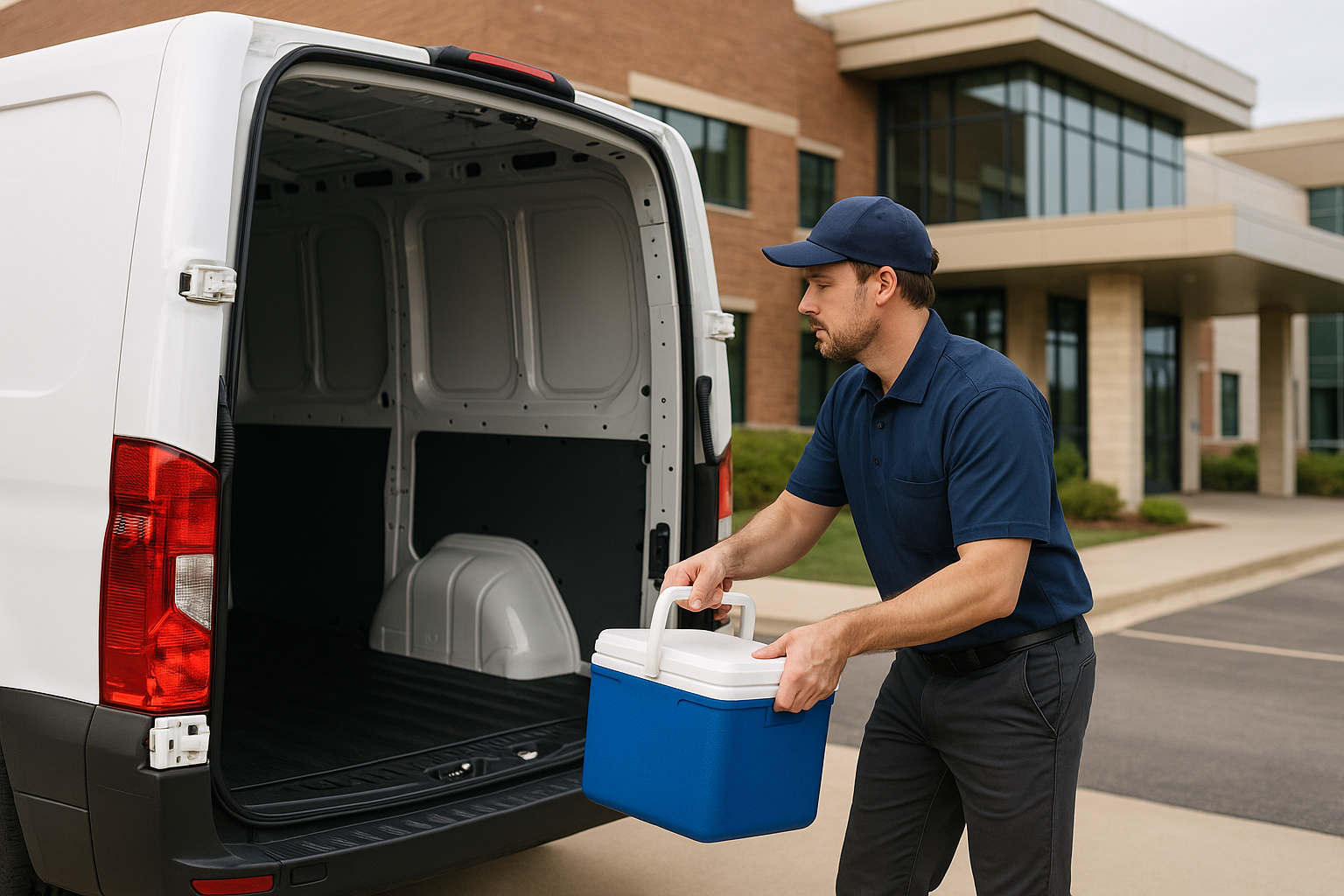
Yes, you can sell a medical courier business in Chicagoland. And if you've got repeat routes, healthcare customers, clean records, and drivers who show up when they're supposed to, buyers are going to pay attention.
But they're not just buying vans and revenue. They're buying trust. Labs, hospitals, pharmacies, dental practices, and home health providers don't hand over specimens, medical records, pharmaceuticals, and time-sensitive deliveries to just anybody. You built something real there. Now the job is to show a buyer exactly why it works, where the money is, and how it keeps working after you hand them the keys.
That's where a little prep goes a long way. Not scary prep. Smart prep. The kind that turns buyer questions into buyer confidence.
Route quality beats raw revenue
Top-line sales matter, sure. But buyers want to know what kind of sales they are.
Is the money coming from scheduled daily routes? Or is it mostly one-off STAT runs and last-minute chaos? A courier company with dense routes between Chicago, Naperville, Schaumburg, Elgin, Glen Ellyn, and the surrounding suburbs is a very different animal than a company driving all over Illinois for thin-margin deliveries.
So pull the route detail together. Not from memory. From records.
- Average stops per route
- Miles driven
- Delivery windows
- Customer locations
- Recurring route frequency
- After-hours call volume
- Gross margin by customer
- Gross margin by route type
If your dispatch system can export route history, save it. If you're still doing part of this manually, start a spreadsheet now. Buyers don't need fancy, they need clear.
Route density is a big deal. If you've already got strong coverage near hospital campuses, reference labs, surgery centers, and specialty clinics, that's exciting to the right buyer. They can see expansion. They can see add-on routes. They can see better truck and driver use. Long routes with inconsistent pickup volume? Not fatal. But the pricing better support the mileage and driver time. If it doesn't, fix it before you go to market.
Contracts make the story stronger
A lot of medical courier work is built on trust. I get it. You picked up for the same lab for 11 years, everybody knows everybody, and the phone just rings when they need you.
That's great. But a buyer still wants paper.
Gather every customer contract, service level agreement, pricing schedule, renewal date, termination clause, fuel surcharge term, and proof of insurance requirement. If a hospital system or lab requires special endorsements, have those ready too.
What if your best accounts are verbal? Then document the history. How long you've served them. Average monthly revenue. Route schedule. Main contacts. Any price changes. And if you can get a written renewal before selling, even better. Do it.
Customer concentration also gets attention. If one laboratory or healthcare system is a large chunk of revenue, buyers will ask a very fair question: will they stay after closing?
The answer can absolutely be yes. But you need a handoff plan. Customer introductions, a short post-closing consulting period, and a clean transition make a big difference. Especially if you're the face of the business.
Chain of custody has to be proven
This isn't general delivery. Medical courier work can involve specimens, pharmaceuticals, medical records, refrigerated items, frozen items, and other regulated materials. Buyers want to know your team handles this correctly.
And more than that, they want proof.
Organize records like:
- Driver training logs
- Specimen handling training
- HIPAA awareness records
- Bloodborne pathogens training
- Safety procedure records
- Chain-of-custody forms
- Electronic delivery confirmations
- Temperature-control logs
- Incident reports
- Corrective action records
- Customer complaint history
- Insurance certificates
- Customer-required endorsements
- Claims history
- Written SOPs
Those SOPs should cover pickups, deliveries, exceptions, spills, and failed delivery attempts. Simple is fine. Clear is better than pretty.
Do buyers expect perfection? No. They expect a professional system. Big difference. If every answer is, “I just know how we do it,” that's a red flag. Easy fix, though. Write it down. Train to it. Keep the records. That work pays you back at closing.
Pro tip: HIPAA, OSHA, DOT, customer requirements — don't guess. If a customer requires it, keep the proof in one folder.
Drivers can make or break the deal
Labor is one of the first places buyers dig in. Every time.
They'll ask if your drivers are employees or independent contractors. How are they paid? Whose vehicles do they use? Has the classification been reviewed with legal or tax advisors? Misclassification concerns don't usually kill a good deal, but they can change price, terms, indemnity requests, and deal structure.
Have a driver roster ready. Include:
- Tenure
- Route assignments
- Pay method
- Vehicle ownership
- Background check status
- Motor vehicle record review dates
- Training completion
- Customer-specific clearances
If one dispatcher knows everything and two long-tenured drivers hold the whole place together, say it. Then show the backup plan. Cross-trained staff and written route procedures calm buyers down fast.
Driver retention matters too. If your people are underpaid compared with the market, a buyer will adjust earnings for the real cost of keeping them. Same with fuel, insurance, and vehicle maintenance. Strong margins are great, sustainable margins are better.
Fleet and tech tell a buyer how clean the operation is
Your fleet doesn't have to be brand new. It does have to be understood.
Buyers will look at age, mileage, maintenance history, title status, lease terms, and replacement needs. Aging vehicles can still be part of a good sale, but deferred maintenance becomes a negotiation point. Keep maintenance logs, repair invoices, registration records, and insurance schedules in order.
Technology helps too. Dispatch software, GPS tracking, barcode scanning, electronic proof of delivery, customer portals, and temperature monitoring all make the business easier to trust and easier to scale.
If your tech is basic, that's not a deal killer. Just be ready to explain how dispatch accuracy, delivery confirmation, and customer communication work now. Buyers don't need perfect software, they need confidence the packages get where they belong, on time, with proof.
Show the financials the right way
Clean books sell businesses. Messy books slow everything down, and they make buyers nervous for no good reason.
Have at least three years of profit and loss statements, tax returns, balance sheets, payroll records, fuel expense, insurance expense, vehicle costs, and contractor payments. For a medical courier company, separate the revenue if you can:
- Recurring scheduled routes
- STAT or rush work
- Lab work
- Pharmacy work
- Non-medical courier revenue
Owner add-backs need to be real. If you drive routes, dispatch after hours, handle sales, or manage key accounts, a buyer may need to replace that work. That cost matters. Don't overstate seller discretionary earnings. It doesn't help, it just creates a fight later.
At Tangent Brokerage, we spend a lot of time getting this part right before buyers ever see the deal. Because when the numbers match the story, good buyers move.
Get buyer-ready before you go quiet
Before the business is marketed, build a buyer package. Financials. Route summaries. Contract lists. Fleet records. Compliance files. Driver information. Growth ideas.
And be specific about the upside. Maybe the next owner can expand into more suburbs. Add pharmacy delivery. Improve route density. Win more lab contracts. Upgrade dispatch technology. Buyers love a business that works now and still has room to run.
Confidentiality matters, of course. Your employees, drivers, and healthcare customers shouldn't hear about a sale in the parking lot. Use nondisclosure agreements, staged information release, and buyer qualification. Serious buyers understand that. The unserious ones don't get the keys to the file room.
Selling a medical courier business in Chicagoland is not just about finding someone who likes logistics. You want a buyer who understands healthcare expectations, route economics, compliance, and driver reliability. When those pieces are organized, the whole deal feels stronger. Cleaner. More valuable.
FAQs
How long does it take to sell a medical courier business?
Most good businesses take several months from prep to closing. If your financials, contracts, route data, and compliance records are ready, the process usually moves much better.
Do I need written contracts with every customer?
No, but written contracts help. For verbal accounts, document the history, pricing, route schedule, and customer contact so a buyer can understand the relationship.
Will buyers care if I use independent contractor drivers?
Yes. They’ll want to understand classification, pay method, vehicle ownership, insurance, background checks, and whether legal or tax advisors have reviewed the setup.
Can I sell if my vehicles are older?
Yes. Just have maintenance logs, repair invoices, titles, leases, registration records, and replacement needs ready. Old vehicles with clean records beat mystery vehicles every day.
How do we keep the sale confidential?
Tangent Brokerage uses buyer screening, nondisclosure agreements, and staged information sharing so employees, drivers, and customers are protected during the process.
You built a business that moves critical items for people who count on you. That's worth taking seriously, and it's worth presenting the right way. If you're thinking about selling your medical courier business in Chicagoland, contact Tangent Brokerage at 630-862-5234 or request a free valuation. Let's see what you've built and what your next chapter can look like.